
Guide, United States
Best first aid kit for home and car: how to choose
Last reviewed: November 1, 2026
The best first aid kit for a home and a car is one sized to the number of people it serves, held in a case that keeps the contents dry, stored where everyone can find it, and checked on a schedule. The most important thing to do after you buy any kit is open it and read what is inside.
These are products we sell, and this guide covers some of them. We print no prices because they change, and we make no medical claims. General information, not medical advice: for treatment, use a trained first aider, a first aid course or emergency services.
What the official sources say
The official sources are short on detail, and we think you should know that. Ready.gov's kit page lists a "First aid kit" among the basic supplies. It does not itemize what the kit should hold. Its car page lists jumper cables, flares or a reflective triangle, an ice scraper, a car cell phone charger, a blanket, a map and cat litter or sand for traction, and a first aid kit appears only in the description of its photograph, not in the list. So we will not quote you an official contents list, and we advise against trusting anyone who says a single list is the standard.
What the official page does say about any kit is practical:
- Keep it in a designated place and have it ready in case you have to leave home quickly.
- Keep a kit of emergency supplies in your car in case you are stranded.
- Re-think your needs every year and update the kit as your family's needs change.
That last line is the one that matters for a first aid kit: needs change, and so does the stock.
How to choose, in order
- Size it to the people. The kits below are sized for up to 10, 25 or 50 people. A household of four does not need a 50 person kit, but a work truck, a garage workshop or a block party might.
- Choose the case. A weatherproof, gasketed case is the right match for a car, a garage or a boat, where moisture and temperature swings are the problem. A metal case suits a workshop.
- Read the contents. Some supplier listings do not itemize the contents. If yours does not, open the kit on arrival and read the inside of the lid before you put it away.
- Add what you personally need. Prescription and non-prescription medicines belong on the Ready.gov kit page's list, and they are yours to supply. A kit cannot know your allergies.
- Store it in a known place at home, and put a second kit in each vehicle.
- Check it once a year, which is Ready.gov's cadence for a whole kit, and again after you use it.

Our first aid kits
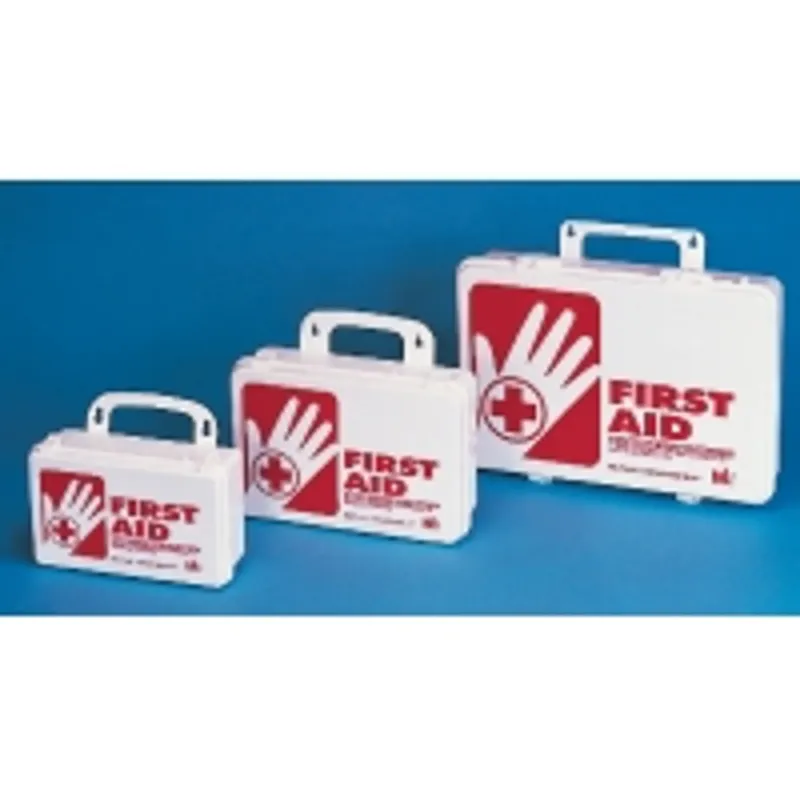 Weatherproof first aid kit, 10 personMutual Industries, weatherproof polypropylene case with a gasket sealSee details and price
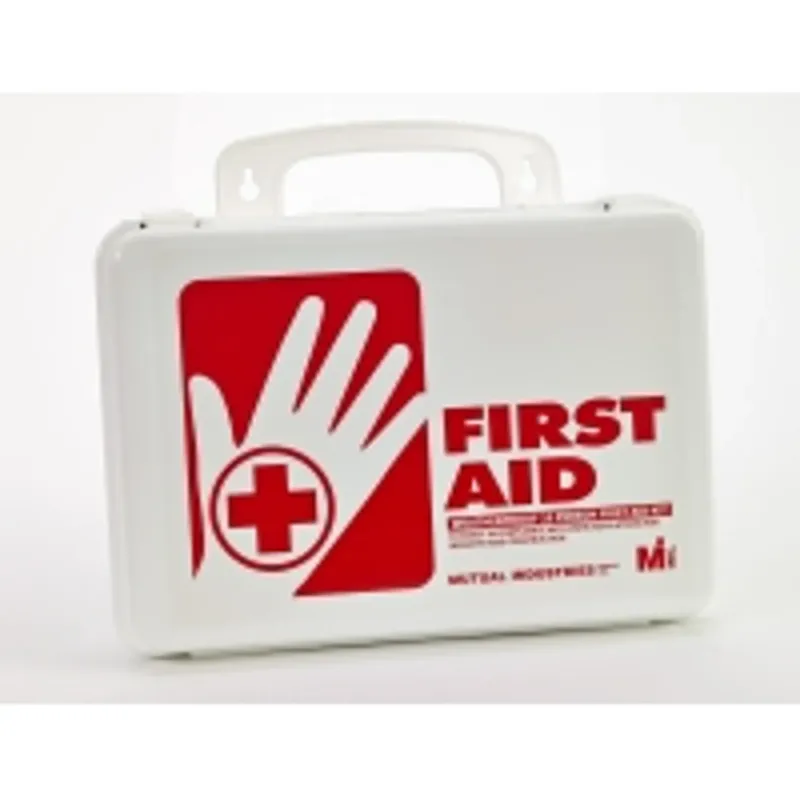 Weatherproof first aid kit, 25 personMutual Industries, same case in the mid sizeSee details and price
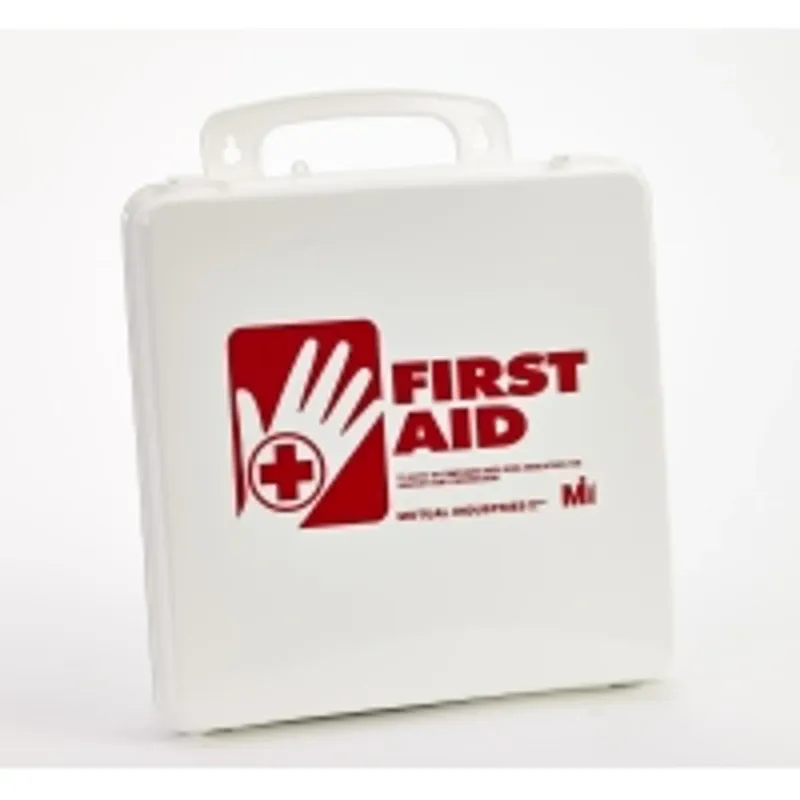 Weatherproof first aid kit, 50 personMutual Industries, the large workplace sizeSee details and price
- 25 person contractor first aid kit, metal caseListed as a contractor kit in a metal caseSee details and price
- Emergency survival rescue foil blanket, 84 x 52 inchListed as 84 x 52 inchSee details and price
Mutual Industries weatherproof kits: 10, 25 and 50 person
These come from one maker in three sizes. Each listing says the case is weatherproof polypropylene with a gasket seal, so the contents stay dry. The listings give part numbers 50001 for the 10 person kit, 50002 for the 25 person kit and 50003 for the 50 person kit. They also say the supplier listing does not itemize the contents, so you should check the inside of the lid on arrival and restock from there.
That is a plain statement of what we know. We cannot tell you what bandages or dressings are in these kits, and we will not guess.
- 10 person: the listing describes it as compact and suited to the home, the car or a small work crew.
- 25 person: the listing describes it as mid size, for a vehicle, a workshop or the garage.
- 50 person: the listing describes it as a large workplace kit for a truck, a workshop or a site shed.
25 person contractor kit, metal case
This is a separate product from a different supplier line. The listing says only that it is a 25 person contractor first aid kit with a metal case, so check the product page for anything further. A metal case is a reasonable choice for a job site or workshop, and weatherproofing is something you should confirm on the page and not assume.
Foil blanket
The emergency foil blanket is listed at 84 x 52 inch. Ready.gov's car page lists a blanket for the vehicle kit, and a foil blanket is light enough to keep in the glove box. The listing makes no claim about warmth ratings, so we make none.
Kits that include a smaller first aid kit
Several of our ready-made kits carry a first aid kit inside. These are described on their own listings:
- The 72 hour commuter kit includes a small first aid kit with 4 adhesive bandages, 2 gauze pads and 2 antiseptic wipes, plus an emergency blanket, for the car, desk or locker.
- The family power outage kit includes a deluxe first aid kit with 65 adhesive bandages, gauze pads and roll, an elastic bandage, finger splints, an instant cold pack, tape, tweezers and a guide.
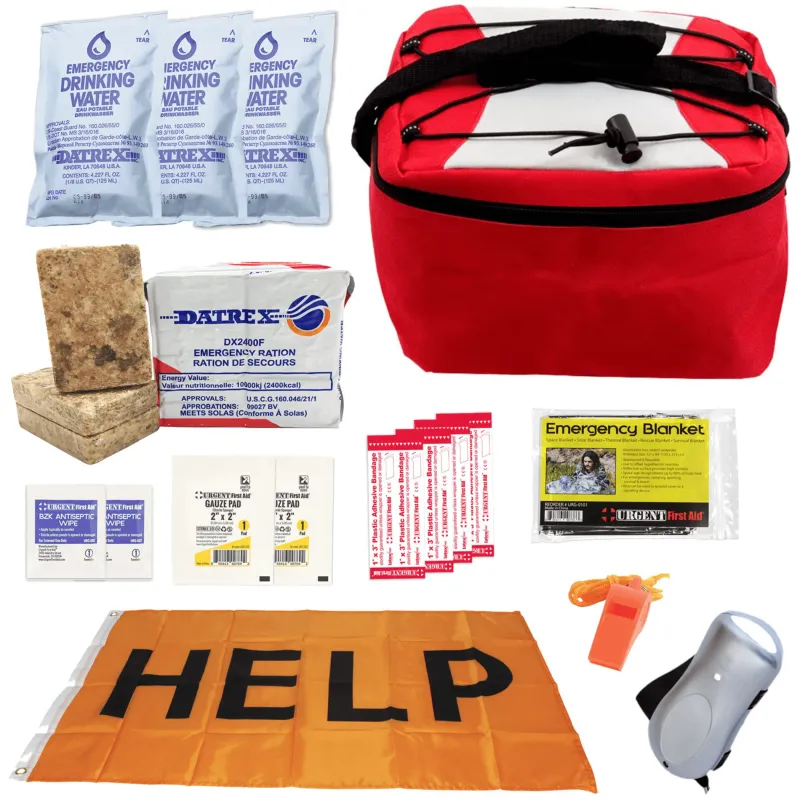 72 hour emergency commuter survival kitA small kit for the car, desk or lockerSee details and price
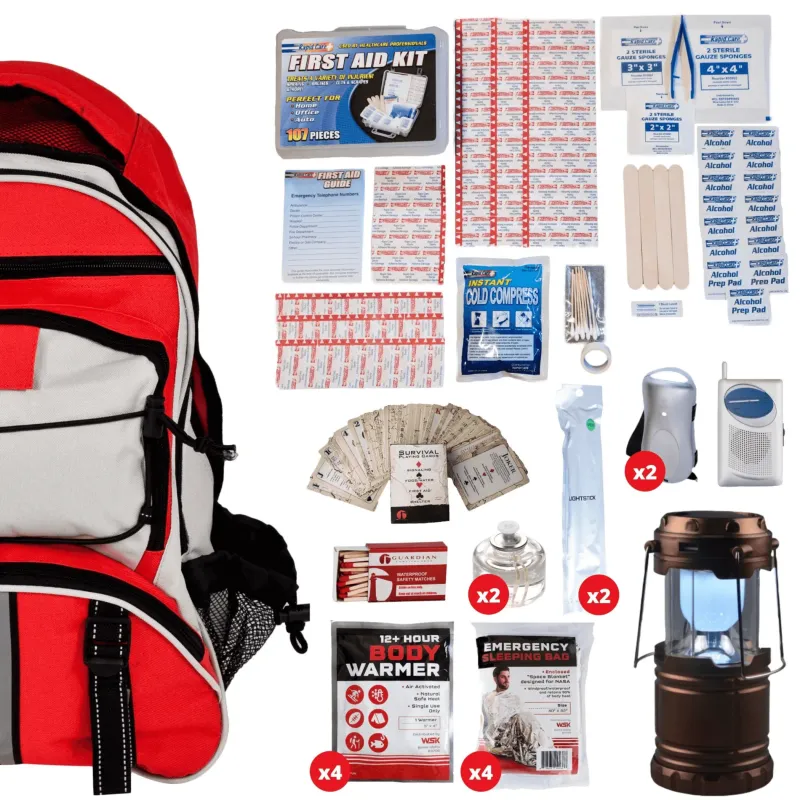 Family power outage emergency survival kitA backpack kit with a deluxe first aid kit insideSee details and price
These are the listings' own figures. They are a good fit when you want a first aid kit as part of a larger kit, and not a replacement for a stand-alone kit sized to your household.

Home versus car
| Home | Car | |
|---|---|---|
| Where | A designated place everyone knows | Within reach, not buried under cargo |
| Case | Any sturdy case | Weatherproof; cars swing hot and cold |
| Size | Match the household, add visitors | Match the usual passengers |
| Extras | Your family's medicines | A blanket, as on Ready.gov's car list |
| Check | At least once a year | When you check the rest of the car kit |
Ready.gov's wildfire page also says to keep supplies, including a first aid kit, in a go bag or the car trunk if you may need to leave. That is one more reason to put a kit where you can reach it on the way out.
Questions people ask
Which size should I buy for a family of four? The 10 person kit is sized above your headcount, which leaves room for guests. The 25 person kit suits a garage, a vehicle shared by several people or a small crew. Choose by where the kit lives and who might need it.
Is a bigger kit better? Not by itself. A bigger kit has more of whatever it holds, and you have to check it. A kit you have read through and know how to use is better than a bigger one you have not opened.
Do these kits include medicines? The listings do not say so. Medicines are your own to add, and Ready.gov's list asks you to think about both prescription and non-prescription ones.
Should I take a first aid course? A kit is a tool and a course is the skill. We are not able to give medical advice here, and a trained provider can.
Sources and last checked
All pages opened on November 1, 2026.
The Red Cross pages on first aid kits refused our requests, so nothing here is taken from them. Product specifications come from the product pages on this site. If you find an error, tell us through the contact page and we will check it against the source.


More guides for United States
- 72 Hour Kit vs Build Your Own: Which Should You Buy?
- 72-Hour Kit List for a Family, With Free Printable
- Affordable Home Security for Renters: Sensors, Locks, Lights
- Best Bug Out Bag: How to Choose a Pack and a Kit
- Best Emergency Food Supply for a Family: Buckets and Bundles
- Bug Out Bag List for a Family of Four
- Emergency Radio Buying Guide: Hand Crank and NOAA Weather
- Home Security for Renters: No-Drill Options
- Power Outage Emergency Kit: Full List and Safety Rules
- Prepping for Beginners: A Calm 7-Day Plan
- Winter Storm Preparedness Kit: A Checklist for Home