
Guide, United States
Best bug out bag: how to choose a pack and a kit
Last reviewed: November 1, 2026
A bug out bag is a pack you can pick up and leave with. The best one for you is the one that fits your body, holds what your household needs for a few days, and is light enough that you can actually carry it where you would have to go. Choose the bag first by size and comfort, then fill it.
These are products we sell, and this guide covers some of them. We print no prices because they change. We use the specifications on each listing and Ready.gov's evacuation guidance, and we have not field-tested any pack.
What the official guidance says
Ready.gov calls it a go-bag. Its evacuation page says to build a go-bag with all the essentials you might need, so you do not need to scramble in an evacuation. It says to prepare one you can carry when you evacuate on foot or by public transportation, and to have supplies for traveling longer distances if you have a car. It says everyone in your household should know where the bag is stored. It also says to keep a portable emergency kit in the car, to take your emergency supply kit, and to listen to a battery-powered radio and follow local evacuation instructions. It says to always follow the instructions of local officials.
Notice what it does not say. It gives no weight limit, no list of gear for leaving permanently and no reason to head into the wilderness. Our reading is that the point of the bag is to get you through a few days away from home after an order to leave.
Choosing the pack
- Pick the size by the person. A bag a child or older adult cannot lift is not a bag. Load it, lift it, and walk with it.
- Check the specifications on the listing: capacity in liters, weight when empty, the material, the compartments and the straps.
- Look at the carry system. Padded straps and a ventilated back matter when you walk. A hip belt moves weight to your hips; it is listed on only the largest pack in our range.
- Think about water. Water is the heaviest thing you carry. Ready.gov's rate is one gallon per person per day for several days. A gallon of water weighs a little over 8 pounds, a standard conversion, which is why a bag carries a filter and a way to refill and not three days of stored water.
- Weigh the full bag and be honest about whether you can carry it.

Our packs
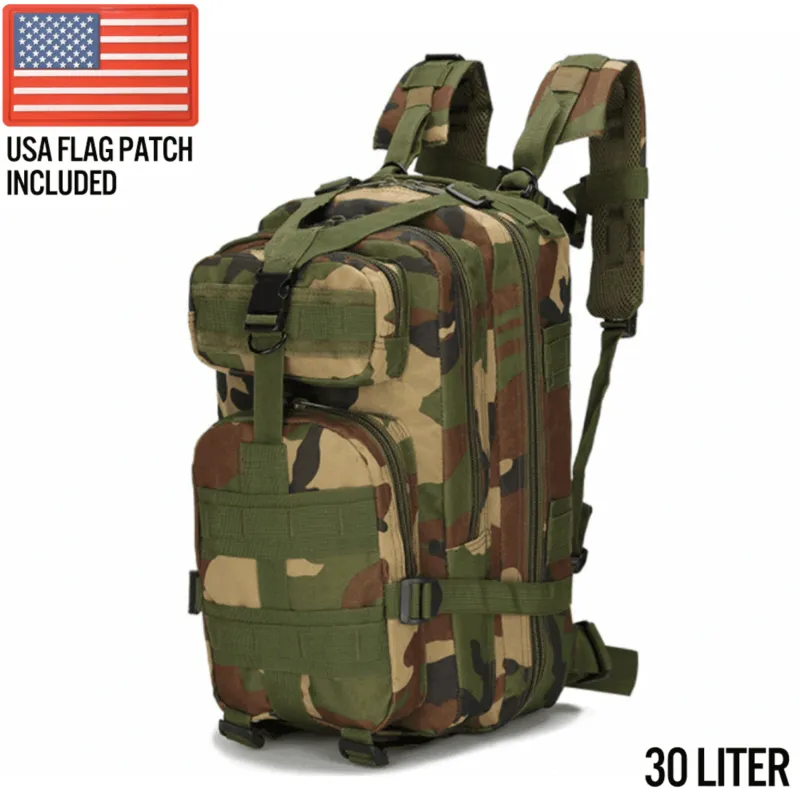 30 L backpack, XGear XG-MB30600D Oxford nylon, waterproof, laptop divider and water bladder sleeveSee details and price
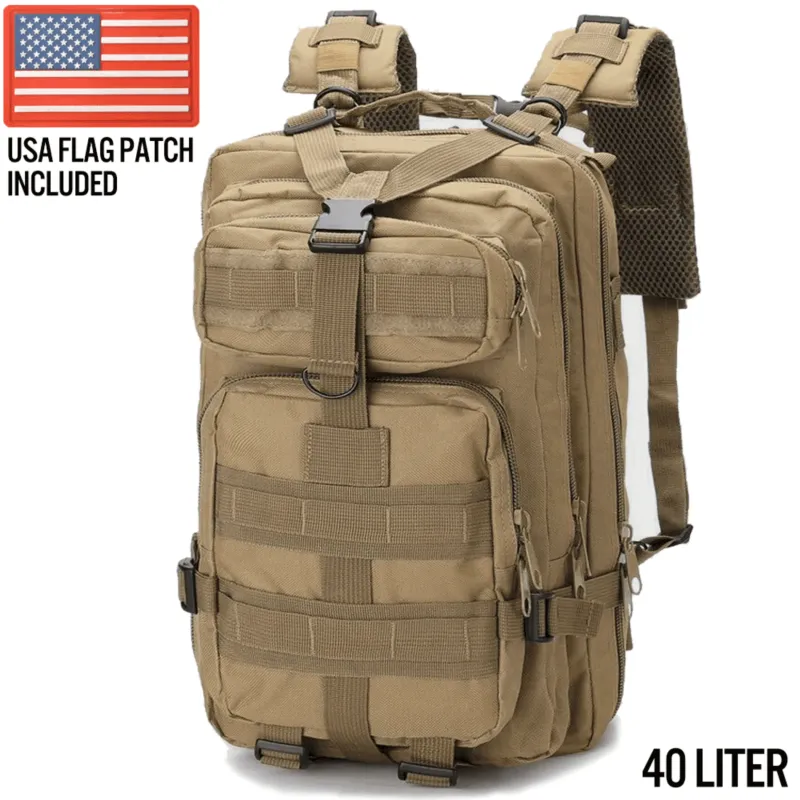 40 L backpack, XGear XG-MB40800D Oxford nylon, waterproof, laptop divider and water bladder sleeveSee details and price
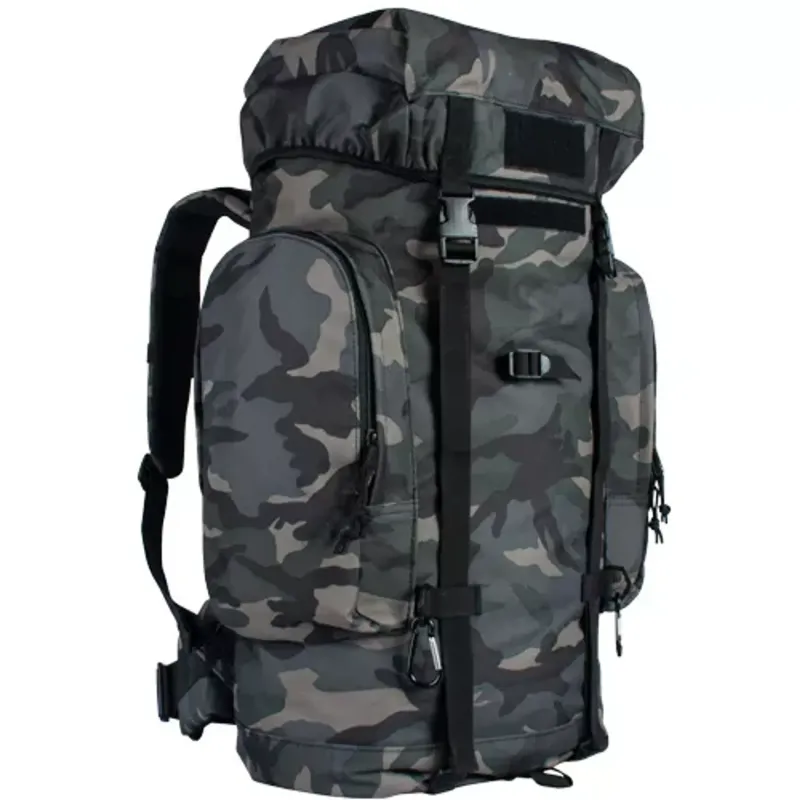 Rio Grande 75 L backpackInternal frame, padded hip belt, fitted rain flySee details and price
30 L: a compact go bag
The listing says the XGear XG-MB30 holds 30 liters and is made from waterproof 600D Oxford nylon. It has a zip around main compartment with an inside zip pocket, a mesh pocket, a divider for a laptop or tablet and a sleeve for a water bladder. Padded adjustable mesh shoulder straps, side compression straps and a breathable mesh back, with MOLLE webbing, D rings and loops for extra gear. 17 x 9.5 x 8 in and 1.6 lb. It suits one adult's essentials, or a teenager's bag.
40 L: a roomy daypack
The XGear XG-MB40 holds 40 liters in waterproof 800D Oxford nylon, with the same layout, 19.5 x 11 x 10 in and 1.9 lb. It suits an adult who is carrying water, a change of clothes and a kit.
75 L: a family pack
The Rio Grande 75 holds 75 liters (4,624 cubic inches) in one large zippered main compartment with four outside pockets, over a deluxe internal frame with a padded hip belt, padded and ventilated back panel and full length bottom compression straps. A fitted rain fly packs into its own pocket. The listing describes it as a big pack for long trips or for keeping a family's gear in one place. A loaded 75 L pack is heavy; it is a base-bag for the car or a trip, and not a first choice for a child or for walking far.
Pre-packed kits to put in the bag
If you do not want to assemble the contents, start from a kit that is already packed.
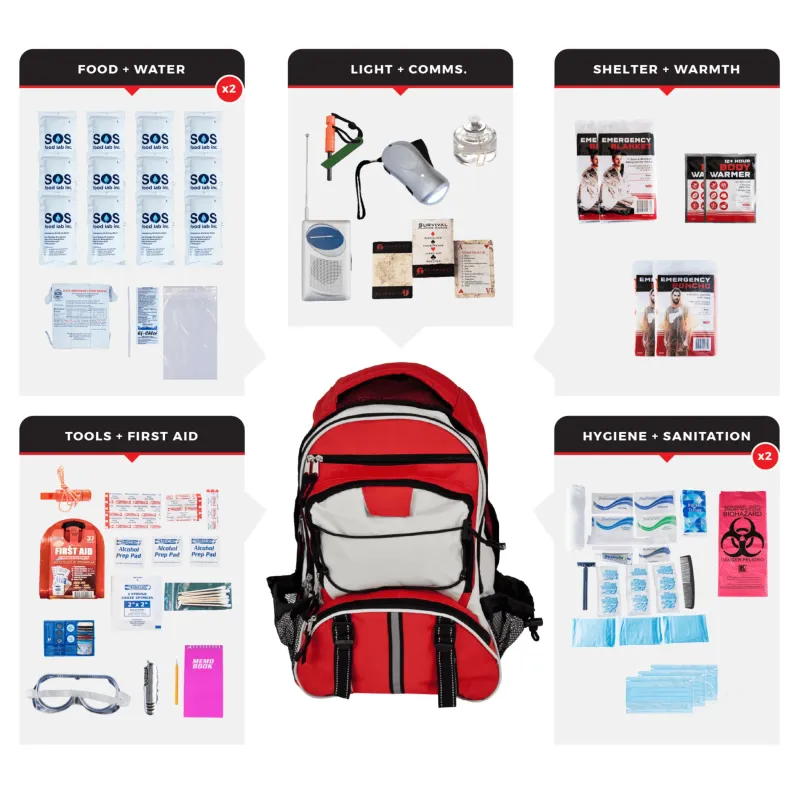 Essential survival kit for up to 2 people, with backpack24 water pouches, 18 food bars, radio, blankets and more in a backpackSee details and price
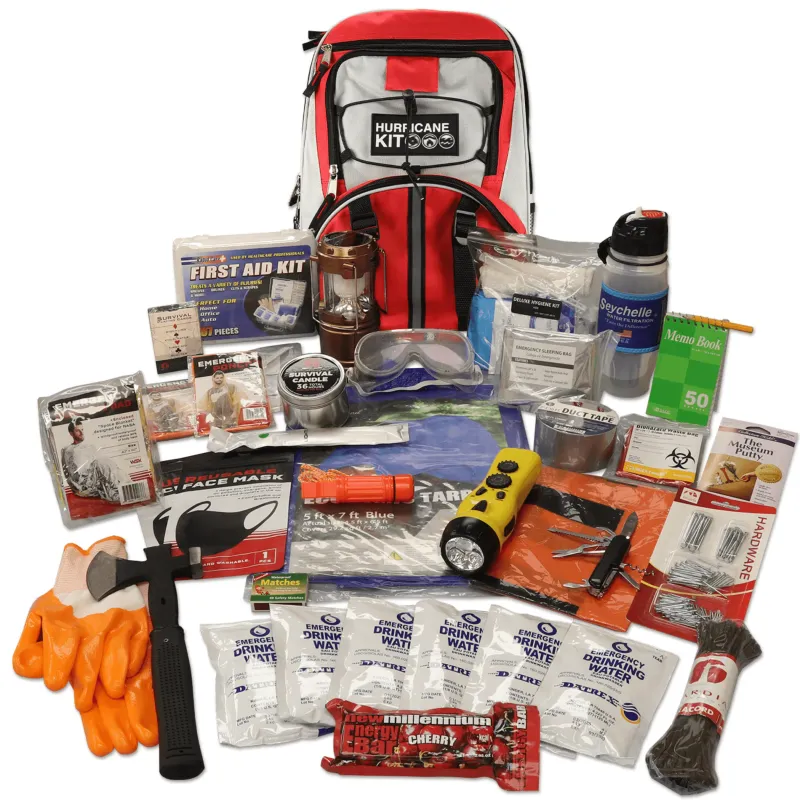 72 hour hurricane emergency survival kit with backpackFood and water for one day, lighting, shelter items, tools and first aid, 14 lbSee details and price
- 2 person necessity survival kit with dry bagListed as a 2 person kit with a dry bagSee details and price
- 4 person necessity survival kit with backpackListed as a 4 person kit with a backpackSee details and price
The kit for two comes in its own backpack, model SKX2-BBP, 18 x 10 x 10 in and 16 lb according to the listing. The hurricane kit is a hand assembled storm season kit in a red multi pocket hiking backpack, with every item sealed in waterproof bags, model SKHR-BBP, 14 lb. The two necessity kits are listed with a dry bag or a backpack and give no contents, so open the product pages and check the list before you decide.
Add a headlamp. The 3 in 1 rechargeable LED headlamp is listed with three LED bulbs, three lighting functions and wall and car chargers in the box.
What goes in, in order of priority
Use the Ready.gov kit list as the checklist: water, food, a radio and a NOAA Weather Radio with tone alert, a flashlight and extra batteries, a first aid kit, a whistle, a dust mask, moist towelettes, garbage bags and plastic ties, a manual can opener, a local map, and a cell phone with chargers. Then add what only your household needs, as our own suggestions: medicines, glasses, infant supplies, copies of important documents and some cash. Our bug out bag list for a family breaks that down per person.

A simple way to test the bag
Load the bag with everything it will carry, including water, and weigh it on a bathroom scale. Walk it around the block, then up a flight of stairs. Note what rubs, what shifts and what you wish you could reach without taking the bag off. Move heavy items close to your back, put the radio and the light where your hand finds them, and write down what you changed. Do the same with each family member's bag, because the child's bag and the adult's bag should not be the same weight. This is our suggestion, not an official procedure.
Common mistakes
- Buying the biggest bag. Size invites weight. Start small.
- Packing once and forgetting it. Ready.gov says to re-think your needs every year and update your kit as your family's needs change.
- Skipping the walk. Carry the full bag around the block before you trust it.
- Forgetting the car. Ready.gov says to keep a portable kit in the car as well.
- Ignoring the plan. The bag is half of it; the other half is knowing where you would go and which way, and listening to local officials.
Questions people ask
What is the difference between a bug out bag and a 72 hour kit? The name is mostly marketing. A 72 hour kit is the supplies for three days; a bug out bag is how you carry them. Our 72 hour kit comparison covers the buy-or-build question.
Which size is the best bug out bag? For most adults, 30 to 40 liters is where our two daypacks sit. Choose by what you can carry, not by what the bag can hold.
Does the bag come with anything inside? The three backpack listings describe the pack and do not list any contents. The kits listed above come already packed.
Sources and last checked
All pages opened on November 1, 2026.
Product specifications come from the product pages on this site. If you find an error, tell us through the contact page and we will check it against the source.


More guides for United States
- 72 Hour Kit vs Build Your Own: Which Should You Buy?
- 72-Hour Kit List for a Family, With Free Printable
- Affordable Home Security for Renters: Sensors, Locks, Lights
- Best Emergency Food Supply for a Family: Buckets and Bundles
- Best First Aid Kit for Home and Car: How to Choose
- Bug Out Bag List for a Family of Four
- Emergency Radio Buying Guide: Hand Crank and NOAA Weather
- Home Security for Renters: No-Drill Options
- Power Outage Emergency Kit: Full List and Safety Rules
- Prepping for Beginners: A Calm 7-Day Plan
- Winter Storm Preparedness Kit: A Checklist for Home